Two weeks on crutches nearly broke me. Not because of the pain. Because of the helplessness.
I am not built for helplessness!
I hobbled around my own kitchen spilling water on myself rather than let someone bring it to me. My crutches clattered. My cup leaked. My dignity remained completely, stubbornly intact!
It was then I realized: I will do absolutely ANYTHING to stay independent. Including, apparently, building functional strength for the next twenty years.
Turns out, the women who stay fiercely, joyfully independent into their 80s? They figured a few things out early. And nobody told us those things. Until now.
Secret #1: They Never Stopped Getting Up and Down from the Floor
Not as a workout. Just as... life.
Strong 80-year-olds didn't avoid the floor once things got harder. They kept gardening. They kept playing with grandkids. They kept reaching for things in low cabinets. That repetition kept their hips mobile, their core engaged, and their confidence intact.
Why it matters: Getting down and back up uses your hips, core, and arms together - the exact combo that keeps you independent.
Try this: Once a day, lower yourself to the floor and come back up - any way that works. Use a wall, a chair, a pillow. No technique required. Just do it.
Additional Resource: The Muscles That Help You Get Off the Floor (And How to Gently Strengthen Them)
Secret #2: They Kept Carrying Things
Grocery bags. Laundry. Pots of soup. They didn't stop just because it felt like "a lot."
Light, regular carrying builds grip strength, shoulder stability, and the kind of whole-body coordination that makes everything from opening jars to steadying yourself on stairs easier.
Why it matters: Grip strength is one of the best predictors of long-term independence. And it's very trainable.
Try this: When you carry bags from the car, carry them one at a time - and carry them with purpose. Stand tall, core gently engaged. That's a workout.
Secret #3: They Never Fully Trusted a Handrail
Okay, they used handrails. But they didn't rely on them.
The difference is subtle and huge. Women who stay strong keep their legs working when they climb stairs. They don't hang their weight on the rail - they use it as a light touchpoint while their legs do the actual work.
Why it matters: Your stair muscles are your independence muscles. Use them or lose them.
Try this: Next time you go upstairs, hold the rail lightly - fingertips only. Let your legs do the lifting. Notice which leg feels weaker. That's your homework.
Secret #4: They Practiced Balance Like It Was Just Part of Life
They didn't set aside "balance time." They stood on one foot while waiting for the kettle. They walked in grass instead of always on pavement. They reached for high shelves without holding on first.
These micro-challenges kept their balance systems sharp without ever feeling like exercise.
Why it matters: Balance is a skill. It fades with disuse - and it comes back with practice.
Try this: Stand on one foot while you brush your teeth tonight. Hold the counter if you need to. Aim for 10 seconds each side. That's it.
Additional Resource: Balance Is a Skill, Not a Talent: How to Rebuild It Safely After 50
Secret #5: They Sat Down and Stood Up Slowly - on Purpose
Not because they had to. Because they knew it was doing something.
The slow, controlled sit-to-stand is one of the most powerful functional exercises in existence. It works your glutes, thighs, and core all at once. Strong 80-year-olds do it dozens of times a day - from chairs, car seats, sofas - and every single rep counts.
Why it matters: Chair-to-standing is one of the first things that becomes difficult as we age. Practicing it while it's still easy keeps it easy longer.
Try this: Pick one chair in your house. Every time you sit down or stand up, do it slowly. Take 3 seconds to lower yourself. Take 3 seconds to rise. No slamming down, no launching up.
Secret #6: They Walked on Uneven Ground
Sidewalks are fine. Grass, gravel, and slightly uneven paths are better.
Uneven surfaces force your ankles, feet, and lower legs to constantly adjust and stabilize. That tiny, invisible work builds the deep muscle coordination that catches you when you stumble.
Why it matters: Most falls happen on surfaces that aren't perfectly flat. Training on real ground prepares you for real life.
Try this: On your next walk, find a patch of grass or a gentle slope. Walk it slowly. Feel your feet working. That's functional fitness.
Secret #7: They Stayed in the Habit of Reaching
High shelves. Things behind the couch. Items at the back of a deep cabinet.
Strong 80-year-olds never stopped reaching - not recklessly, but regularly. That overhead mobility keeps shoulders flexible, spine extended, and core engaged in ways that upright-only movement simply doesn't.
Why it matters: Shoulder mobility is a quiet casualty of modern life. Once it's gone, it's hard to get back.
Try this: Put something you use every day on a slightly higher shelf than feels totally comfortable. Reach for it every day. That's your mobility work.
Secret #8: They Moved After Sitting
Not a workout. Just... movement.
After sitting for 30 minutes or more, strong older women had a habit of moving before doing anything strenuous. A little walk to the kitchen. A stretch at the window. A slow stand, a hip circle, a few steps before heading out.
Why it matters: Sitting stiffens the hips and quiets the glutes. Moving first wakes everything back up and dramatically reduces the risk of stumbling or misjudging a step.
Try this: Set a soft reminder for every hour. When it goes off, stand up, walk to the nearest window, and come back. That's 60 seconds of movement that could prevent a fall.
Secret #9: They Never Stopped Thinking of Themselves as Strong
This one sounds soft. It isn't.
Women who stay independent into their 80s don't think of themselves as fragile. They don't say "I can't do that anymore" as a reflex. They say "let me try that carefully" or "let me practice that."
They kept a strong identity. And that identity kept them moving.
Why it matters: Research shows that self-perception of aging directly affects physical ability. Women who see themselves as capable are more capable - they try more, move more, and recover faster.
Try this: The next time you catch yourself saying "I can't do that anymore," swap it for "I'm working on that." It's not just positive thinking. It's literally changing how your body responds.
You Already Have What It Takes
You don't need a gym. You don't need a trainer. You don't need to become someone who "works out."
You need to keep moving through your life - carrying things, getting up, reaching up, walking on real ground, and sitting down slowly on purpose.
The women who stay fiercely, joyfully independent at 80? They didn't do anything fancy.
They just never stopped doing the things that matter.
And neither will you.
Gentle reminder: Always check with your doctor before starting any new movement routine, especially if you have balance issues, joint concerns, or recent injuries. These ideas are meant to complement your care, not replace it.
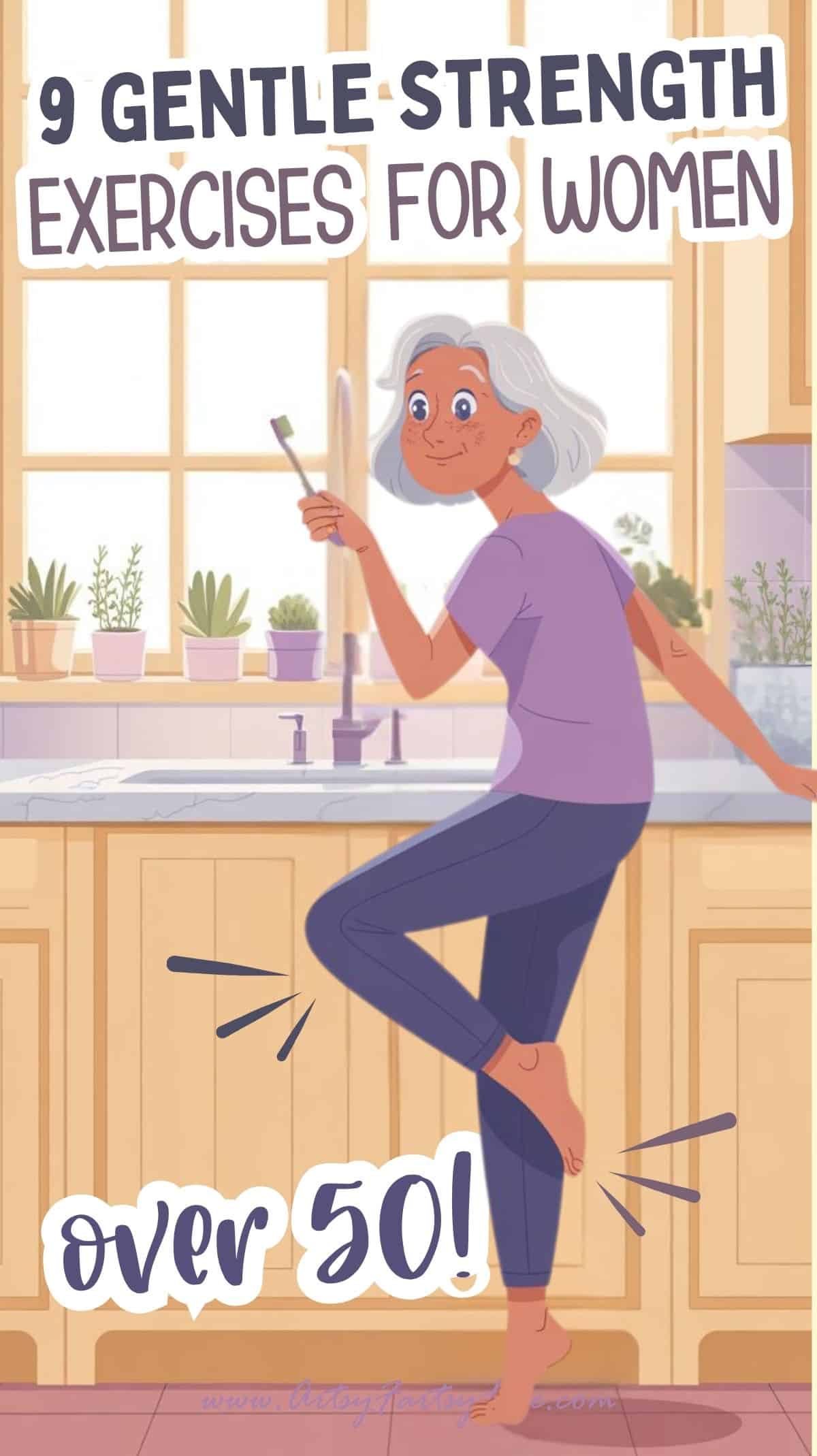
AI Image Disclosure: I have used AI to make some or all of the images in this post! I LOVE that I can include diversity in ages and sizes to encompass all women (not just super skinny youngsters without any seasoning!)