My husband is a go to the grocery store every single day kind of guy. And listen… that sounds like my personal version of chaos. I tease him all the time that he’s clearly having an affair with the Publix cashier because WHY ELSE would someone need to go there this often?!?
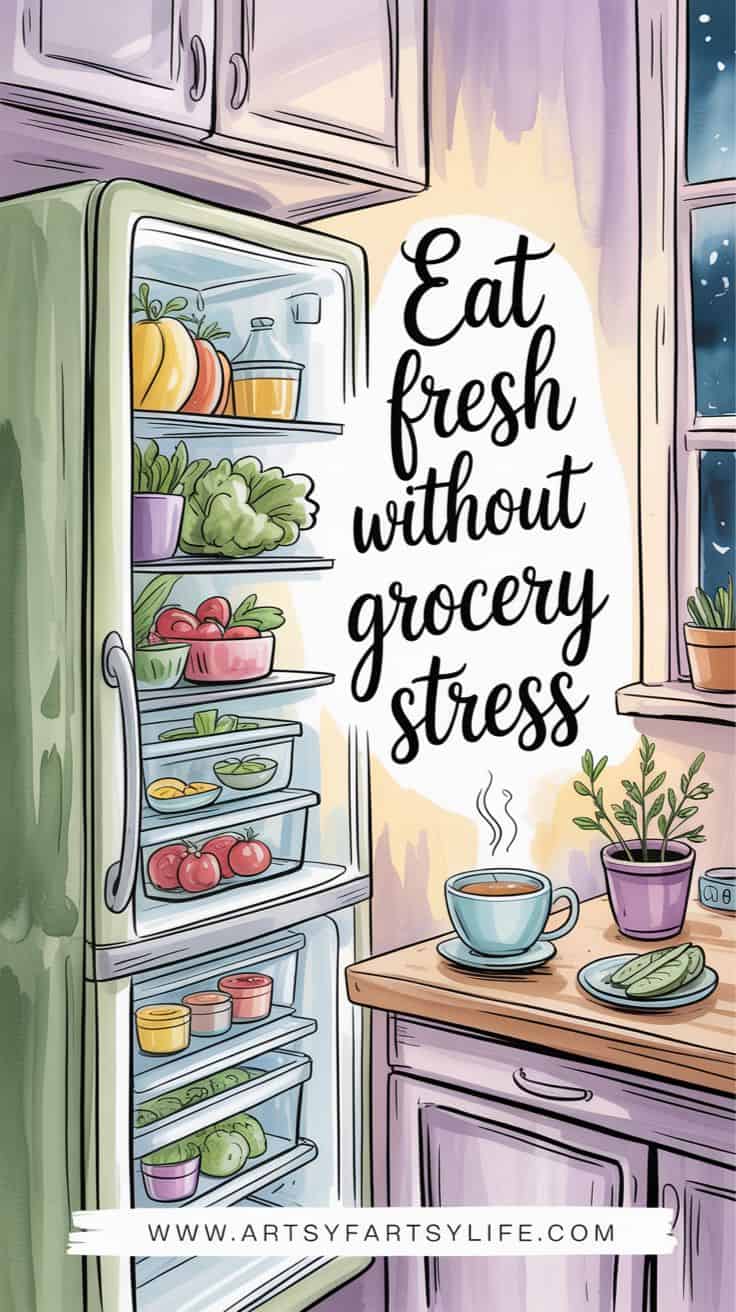
Me? I’m the opposite. I’m a shop once, load up, and stay home for the month kind of gal. And somehow, after years of doing it this way, I’ve figured out how to shop once a month and still eat fresh! Not sad food. Not mystery meals. Real produce. Real dinners. Real life.
If you want to save money, cut grocery stress, and stop running to the store “just for one thing,” these tips will change everything.
🥕 1. Buy Produce With a Timeline in Mind
The biggest secret to shopping once a month is understanding that not all produce is meant to be eaten right away. Some fruits and vegetables are sprinters. Others are marathon runners.
When I shop, I already know which produce is for Week One, which is for Week Two, and which will carry me through the end of the month. That one mindset shift makes monthly shopping totally doable.
Fresh-first produce (Week 1):
- Berries
- Lettuce and salad greens
- Tomatoes
- Cucumbers
- Fresh herbs
Mid-month produce (Week 2):
- Bell peppers
- Broccoli
- Cauliflower
- Zucchini
Long-haul produce (Weeks 3–4):
- Carrots
- Cabbage
- Onions
- Potatoes
- Sweet potatoes
You’re not buying less produce. You’re buying smarter produce.
🧊 2. Prep Produce the Day You Get Home
I know. Nobody wants to do this. But this is the difference between fresh food and a sad, wilted produce drawer.
When I get home from my big grocery trip, I:
- Wash fruits and vegetables
- Dry them well
- Store them properly
Carrots go in water. Greens get wrapped in a towel. Berries get checked and any questionable ones get removed immediately! This one habit alone adds days (and sometimes weeks) to your produce.
Future-you will be VERY grateful!
🥬 3. Learn Which Produce Basically Never Gives Up
Some vegetables are just built different. These are the ones our grandmas relied on because they LAST.
If you want to shop once a month, you want produce that doesn’t panic under pressure.
My ride-or-die long-lasting produce:
- Cabbage (an absolute hero)
- Brussel sprouts
- Carrots
- Beets
- Apples
- Oranges
- Onions
These ingredients can turn into fresh meals even at the very end of the month when everything else is gone.
🧺 4. Use the Freezer to Lock in “Freshness”
Fresh doesn’t always mean never frozen. Sometimes freezing is the smartest thing you can do!
Right after shopping, I freeze:
- Extra bread (I just pulled out some hoagie rolls for dinner today!)
- Berries for smoothies
- Chopped onions and peppers
- Spinach or kale for cooking
- Fresh herbs (chopped with oil in ice cube trays)
This keeps flavors bright and prevents waste. And it means I’m not running to the store mid-month because I “forgot one thing.”
🧂 5. Pantry Staples Make Fresh Meals Possible
Fresh meals don’t come only from the produce aisle.
A well-stocked pantry lets you turn a handful of fresh ingredients into an actual dinner without another grocery run.
Pantry staples that save me every month:
- Rice
- Pasta
- Beans and lentils
- Canned tomatoes
- Broth
- Spices
Add fresh produce and a protein, and suddenly you’re eating well without leaving the house.
🥛 6. Choose Dairy With Longevity
Not all dairy is created equal, and this matters when you’re shopping once a month.
I always choose:
- Block cheese instead of shredded
- Ultra-pasteurized milk when possible
- Yogurt with the longest date
And yes, I freeze cheese. It’s fine. It works. And it keeps me from “just popping into the store.”
🍗 7. Cook Proteins Once and Freeze Portions
This is where monthly shopping REALLY shines.
I’ll cook:
- A big batch of chicken
- Ground beef
- A pork roast
Then I freeze it in meal-sized portions. That way, fresh meals are just a thaw away, not another trip to Publix to see my husband’s “friend.”
🥗 8. Plan Meals in Phases, Not Weeks
I don’t do rigid meal plans. I plan in phases.
- Early month: salads, fresh veggies, lighter meals
- Mid-month: cooked vegetables, casseroles, stir-fries
- End of month: soups, stews, pantry meals
This keeps meals feeling fresh and realistic without pressure.
💛 9. Let Go of “Perfectly Fresh” Expectations
Here’s the truth. Eating fresh doesn’t mean grocery store tomatoes every day. It doesn’t mean daily errands. And it definitely doesn’t mean stress.
It means:
- Thoughtful shopping
- Using what you have
- Eating real food
- Saving money
And honestly? I’d rather shop once, eat well all month, and NOT have a standing appointment with a cashier!
Here are some more articles you might love:
- 11 Freezer Meals on a Shoestring Budget
- How to Stretch Your Food Budget When There’s More Month Than Money
- 13 Nostalgic Foods We Didn’t Know Were Frugal Growing Up